Amazon links are affiliate links. I earn a small commission, but there is no extra cost to you.













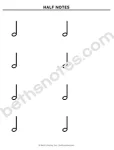
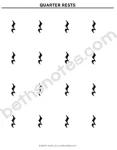
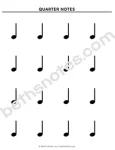
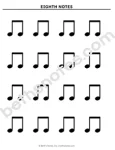

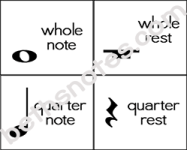
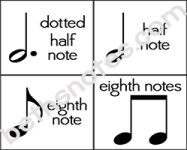
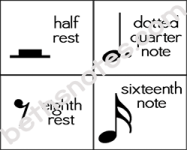
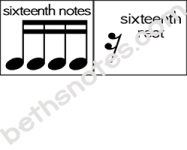




Lesson ideas
- Use hula hoops in 4 different colors (red, orange/yellow, green and blue). You can also make your own. (Use plastic tubing covered by electrical tape. It’s a little cheaper, and you can make the hoops a little smaller and easier to store.)
- Put the 4 hoops on the floor. Turn on a steady beat (Try a “rock beat” on a keyboard. I recommend a tempo
 = 88.)
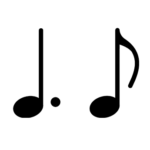
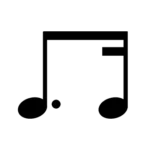
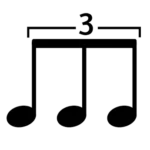
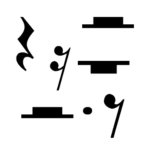
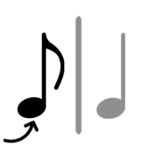
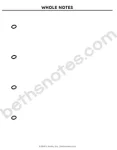
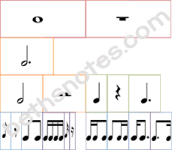
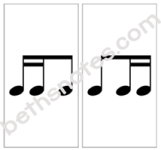
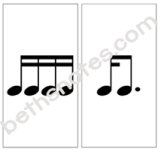
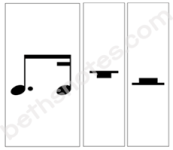
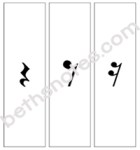
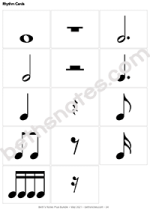
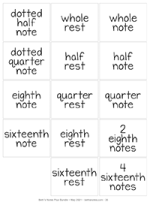
 - Display 4 cards:
 ,
,  , ,
, ,  (The colors correspond with the colors of the hoops.)
 - I demonstrate first. Stand in each hoop for 8 beats.
- When you stand in the red hoop, the students pat s. (I have them pat and slide their hands for the other 3 beats so it feels like a long note.) They can count 1-2-3-4 or say a rhythm syllable while patting.
- yellow/orange hoop =
- green hoop = s
- blue hoop = s
- When you stand in the red hoop, the students pat
- Each 8 beats, step into another hoop. (I usually step on beat 6 or 7 into a new hoop to give the students a second to think about how to pat the next notes.)
- Choose other students to be “conductors” (to step in hoops). When a student is in each hoop, I say “switch” on beat 6 so the student knows to move to the next hoop and be in the new hoop by beat 1.
- Use this as a lesson opener for several days in a row, choosing different students on different days.
Variations
- Divide the class into four groups. Assign each group one of the colors. When a “conductor” steps in the hoop with their color, they perform.
- Students pat steady beat with different body percussion. Red = snap, etc.
- Make cards to signify which types of percussion instruments are to play. Red = woods, etc.
- 32-beat pattern: Have a student put the 4 hoops in a certain order, then stand out of the way. The class performs the 32-beat pattern. They have to count in their heads to know when to switch to the action of the next hoop (every 8 beats).
- Improvisation: Now tell the students to imagine there are 4 hoops in a row. They must improvise their own patterns and switch to a different pattern every 8 beats. Everyone will do it at the same time. This will take practice!