Amazon links are affiliate links. I earn a small commission, but there is no extra cost to you.

First Day of School
On the first days of music class, there are procedures I need to discuss, but I always want to open and close the class with fun musical experiences! Here are some ideas:
- Teach the school song
- Or if you don’t have a good school song, you could sing something meaningful to the area where you live.
- Sing a hello song that you continue to sing in the future.
- Reinforce your rules by singing a positive song about respect, friendship, behavior
- Sing something that makes them laugh and gets them engaged – silly songs
- Sing an active singing game song that you can continue to build on in upcoming classes.
- Start to learn their names – name songs
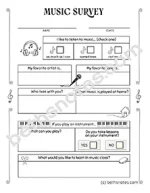
- Learn more about your students with the music survey —>
1
Behavior
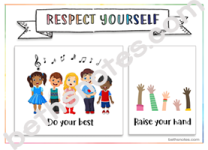
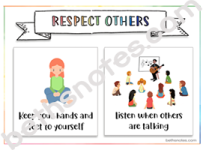
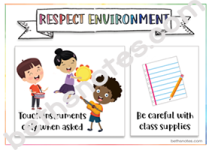
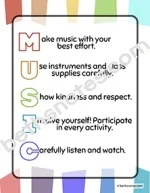
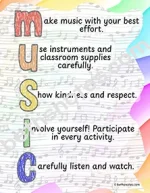
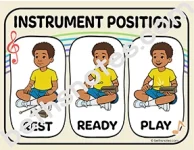
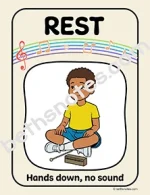
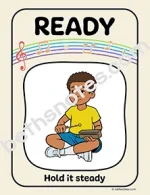
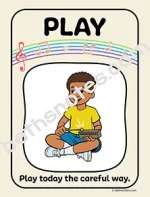
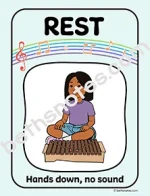
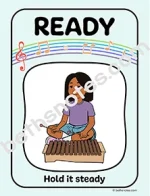
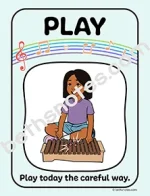
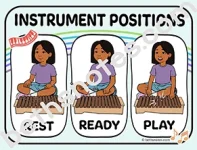
Music Rules Posters & Instrument Position Posters (Rest, Ready, Play)
(See downloads at bottom of page. Each number has a corresponding button.)
2
3
4
Prevention
- Fast-paced, positive lesson. Know your lesson. Keep them engaged in the lesson.
- Verbal: “Those who do a good job in the first part of class get to play an instrument.”
- “Let’s keep those letters up.” (I put MUSIC letters on the board as part of a class behavior plan. When the class is noisy, a letter is removed – or when the class is quiet, a letter is added. A second set of letters – I use gold letters – can be used to add to the board. This is often an even better motivator, because the class can earn another point for a gold letter. When the class accumulates 10 points, they have earned a 10-minute game.)
- Seating chart – place students where they will be least distracted
Positive Reinforcement
- Verbal: “I like the way Johnny is paying attention.” Be specific; name the behavior, not general statements.
- Don’t say: “Johnny, you are so smart” or “Class, you are so good.”
- Do say: “Johnny, I like the way you answered that.” or “Johnny, wow, that was a difficult question!” or “Class, I like how many people are looking at me quietly while I’m speaking!” “That’s a hard song; I can’t believe you learned it so quickly!” “You sure are paying better attention this week than you did last week.” (If you compare behavior, compare it with the job they did another day. Never compare their behavior with another class.)
- Non-verbal: thumbs up, smile, nod, high five
Pre-Correction
- Verbal: Teach the behavior you expect. Be specific. “We are about to hold hands and do a circle dance. How should we hold hands with each other to make sure no one gets hurt?” Then be quick to say to a student who is not complying, “Johnny, it looks like you forgot to be careful with Sammy’s hand. If you do that again, you’ll have to sit out of our dance.” If it happens again, say, “Johnny, sit out for awhile to make sure you or no one else gets hurt.” or “I’m sorry you chose to squeeze Sammy’s hand too hard again. Sit out please.
- Demonstration: If it’s a new exercise, it might be worth the time to have students discuss, even demonstrate “right” and “wrong” behavior.
Discipline
- Redirection:
- Non-verbal: a look, a tap on shoulder or head. Or catch the student’s eye and point to where the rule is posted on the wall.
- Verbal: “Remember, no talking when I’m talking.” “Remember our deal?” “Is that the right thing to be doing now?” “Is that what I asked you to do?”
- Verbal warning. Name the behavior, not the student. Emphasize the choice the student is making.
- Move student’s seat, either temporarily or permanently.
- Time out – if the behavior has stopped the momentum of your teaching.
- Further consequences: call or note home (parent signs), detention, office. Idea: Have same note for all specials teachers.
- Whole-class behavior problems. Every once in awhile, stop the teaching, have honest discussion about how their behavior is affecting the teaching. Do they have ideas to fix it? In a performance group, have the group feel ownership of their behavior; i.e. the behavior affects the concert!
A Few Other Things
- The more you can encourage students to take responsibility for their own behavior, the better.
- Try to act, not react.
“Teacher Speak”
- Positive reinforcement: “Thank you for making a good choice.”
- Verbal warning: “Remember the first rule is to listen to the speaker.”
- Student frequently talking to neighbor: “It seems like it’s hard for you to be quiet when you and Sally are sitting so close together. Do you want me to change your seat so you don’t get in trouble, or do you think you can control it?”
- Student who doesn’t want to work in a group: “It seems like you’re having trouble working with your group. I’m just concerned because you need to work with them to get a good grade. Do you have another idea of how you can get the work done?”
Classroom Reward System
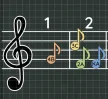
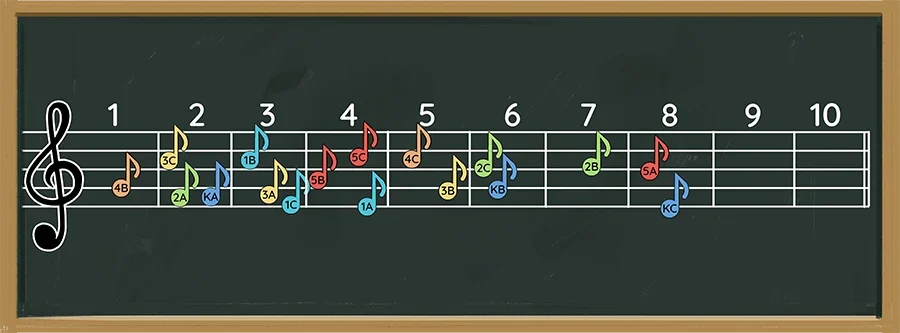
This is an image of the display I leave up all year long. I use a chalkboard with laminated music notes with magnets on the back of each one.
There is one
cut out for each classroom. At the beginning of each lesson, I put up M-U-S-I-C letters on the chalkboard (with magnets on the back, of course).
When the class is noisy, I remove a letter. When the class is quiet, I add a letter. At the end of each lesson, if there is at least one letter left on the board, the class music note gets moved over one measure. (I ask a well-behaved student to move the note over, who also receives a music award.) I find that moving a note up can be more effective to encourage good behavior than moving notes down.
For this reason, I also have a set of gold letters. I add one letter at a time to reward them if they haven’t lost their other letters. I am very stingy with these letters. If they receive any gold letters, they can move their music note over a total of 2 spaces. When they ask me, “What do we get if we earn ALL of the gold letters?” And I tell them, “It’s never happened, so I don’t know!”
When a class gets to 10, they receive 10 minutes of a game at the next music period.

Printable MUSIC Letters
5
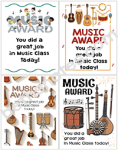
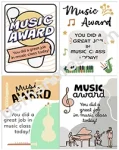
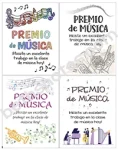
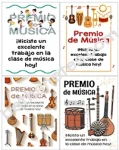
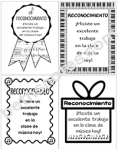
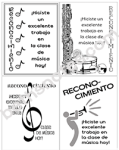
Music Awards
6 English
7 Spanish
Clip System
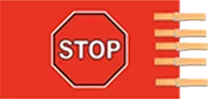
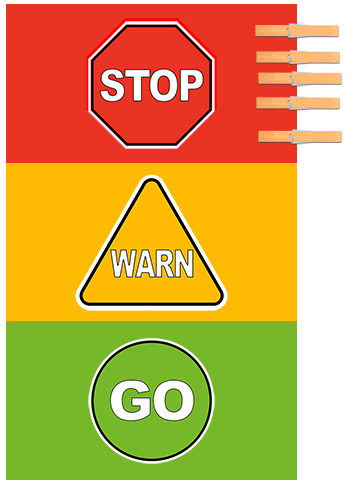
One idea that has been effective for me in the music room is this clip system. At a former school of mine, all teachers had a laminated poster like this one. (But even if other teachers don’t have one, you could use it.) In the students’ home room classrooms, students had clips with their names on them. However, in the music class, mine were blank.
At the beginning of each class, all clips start on “Go” – and if a student misbehaves, they or I move a clip to “Caution.” That just means “warning.” If a student has to move to “Stop,” that means “time out.” Since only a couple or few students have to move their clips in a given class period, it’s not difficult to remember who had to move the clips. (I would also mark it on the seating chart to help me grade their effort.)
Gradebook & Seating Chart
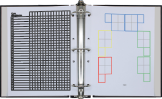
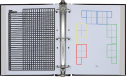
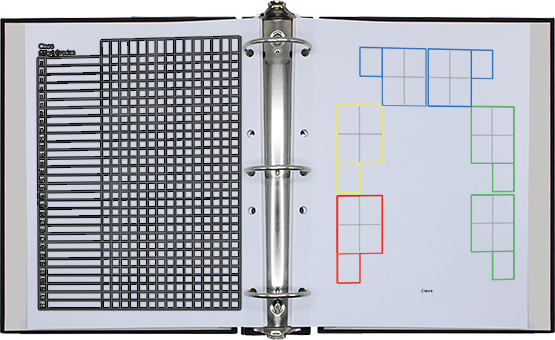
- This is the grade book and seating chart: a binder that I leave on a music stand in the front of my room.
- For each class, I have an alphabetical list of students on one side and a seating chart on the other.
- Of course, my grades are kept on the computer, but having this available allows me to make notes about classroom effort that I later take into consideration when I grade them.
- I also give a music award to one student at the end of each class period, and this is how I keep track of who has received awards.
- This also allows me to keep track of which students have had a turn at various games.
Folders & Pencils
Some music teachers take roll every time the class comes in. (As an elementary music teacher, I’m not required to take roll.) Some music teachers have the students bring folders and pencils every time they come to music. Nothing wrong with these. But I’m not one of those teachers. I’ll tell you why.
- Reason #1: Limited time. I don’t want to spend 5 minutes of each 30-minute class taking roll or checking for folders and pencils.
- Reason #2: If you require that students bring folders and/or pencils, you must have a consequence if they don’t bring them, right? And, then somehow you have to grade them if they are prepared for class or not. I would rather grade on performance, knowledge, and effort. I don’t want to grade their ability to be responsible (unless, of course, you are required to provide a “prepared for class” grade). However, I don’t like averaging together the “ability to bring folder and pencil” with the music grade.
There are a couple of organizational tools I use:
- I provide the pencils and clipboards. I have 3 pencil cans and 3 bins of clipboards in different places in the room. Students get the pencils and clipboards that are closest to their seats. When we have written assessments, students scatter around the room.
- I provide plain paper for formative assessments (lately I’ve gotten used to using clean-on-one-side paper that I scrounge from recycle bins).
- I provide folders for the older kids. But, I don’t have 1 folder per student. What I use is 1 folder per riser (5 to 6 students). One student is the “team leader,” and passes out the papers inside. When we have papers that will be used more than one music day (recorder music or rhythm worksheets), students put their papers in the riser folder. It goes pretty quickly when 1 person per riser passes out and collects the papers. I choose one “folder person” per class to pass out and collect all folders. I do not expect students to bring papers back that have been brought home. (i.e. no homework)
My reasons for no homework
- Reason #1: I work with elementary students, and the majority of our time together is used making music, not learning about music. This needs to happen in the classroom, not at home.
- Reason #2: Once the students leave my classroom, I cannot tell what the students are working on. Parents help some students, while other students don’t have that benefit. Not to mention, there are many parents who don’t know the musical information we are teaching!
- Reason #3: You have to worry about whether students bring the homework back or not. The only time I require students to work on something at home is my Invented Instruments unit – and even then I provide time for students to work in class and come in at recess times to work with me. If students don’t get classwork done in time, I ask them to come in at recess to finish.
- A melody instrument – with the ability to sustain tones. Many of the other Orff instruments don’t hold those half and whole notes.
- Helpful for those students who can’t match pitch or are uncoordinated with mallets.
- A real instrument with a long history and great repertoire
- Helpful for teachers to use – to save your voice and for male teachers to demonstrate in the students’ vocal range
- Portable and personal (everyone has one in their hands)
- Cheap – for those who want to buy them
- Washable – for those who want to borrow a class recorder. I put a piece of electrical tape on the class recorder with the student’s name. That recorder is used the whole year by that one student. At the end of the year, I take those recorders home and put in them in the top rack of the dishwasher.
*(source)
Music Class Risers
I love these Wenger Flip Forms as risers for the kids to sit on! They are versatile (they flip into a couple of configurations), sturdy (they each weigh 100 pounds), and easy to maintain when you have classes coming and going all day (I used to have chairs in my room, and I kept having to rearrange them after kids moved them around).
Cons: static cling in the wintertime. At the first sign of cold weather when the heater is turned on, I have to tell all of my classes they may NOT touch each other at all. Because when I say “shock,” I mean it can REALLY hurt! I can often even hear the sound of the shock from where I’m standing across the room. So, I tell them they have to “move their clip” (school-wide behavior plan) immediately if they are caught “trying to hurt someone else by shocking.” A humidifier in the room or rubbing dryer sheets over the risers can help. I have even walked around with a fine-mist sprayer to spray into the air. None of those ideas work perfectly, so just beware of that problem if you live in a cold climate.
Another con is the price. Check their website. But, if you can get your school or parent association to pay for them, they will last forever. The ones in my classroom are the old type. The new ones are nicer.
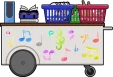
Music on a Cart
It’s no fun to have to teach music without a classroom. Here are some tips that have helped me:
- Get a great cart. The mack-daddy cart is this one: The Teacher Taxi by Wenger. Of course, that’s not always possible. So, make sure you use a cart with wheels that is easily pushable.
- Write a note to the grade-level teachers explaining your needs. Remember: you are a teacher, too! Just because you don’t have a classroom doesn’t mean you’re a second-class citizen – though it sure feels like it, I know.
Standards-Based Grading
Cons of traditional grading
- Inconsistency between teachers on what factors are included in grades
- Inconsistency between teachers on what weight each grade receives
- Achievement grades often include behaviors and efforts
Essential Questions
- What do students need to know and be able to do?
- District Curriculum
- State Standards
- How will we know they have learned it?
- Formative Evaluation: Assessment for learning – checking learning along the way; teacher-made quiz
- Summative Evaluation: Assessment of learning – final check – include on report card; consistent between schools
Change in Thinking
- Teachers teach to the test – because the test is the culmination of what they have learned.
- Explain to students what is expected.
- Behaviors, attendance, effort is separated from achievement grade.
Achievement Marks
|
Symbol
|
Definition
|
|---|---|
|
4
|
Exceeds: Student demonstrates a thorough understanding of facts, concepts, and/or principles, making in-depth inferences, applications, and connection
|
|
3
|
Meets: Student meets grade level expectations with minimal teacher support
|
|
2
|
Approaching: Student is developing and often depends upon teacher for assistance
|
|
1
|
Area of Concern: Student is not meeting grade level expectations
|
Behavior Marks
|
Symbol
|
Definition
|
|---|---|
|
E
|
Excellent: Consistently and independently demonstrates appropriate behavior, attitude, & effort toward the goal
|
|
S
|
Satisfactory: Generally demonstrates appropriate behavior, attitude & effort toward the goal with a few reminders
|
|
N
|
Needs Improvement: Needs frequent reminders to demonstrate appropriate behavior, attitude or effort toward the goal
|
Substitute Teachers
Let’s face it; it’s often more difficult to write out detailed sub plans than to write your own lesson plans! And, the idea of kids breaking instruments and rearranging the music room makes you want to just come in to school, even if you have a fever! Here are some ideas that have worked for me. First of all, let me say that the chances of you getting a sub that knows music and feels familiar singing with the students are very slim. Write non-musical sub plans! It’s good to get a reputation of being a class that’s not difficult to sub for. Also, subs don’t often come in very early. Make your lessons easy to follow – not too wordy, and not too many transitions. To be honest, most of the time, I provided videos with detailed instructions on how to play them.
Since you never know when you might have to call in sick for the next day, always have your sub folder ready. I use a SUB TUB with hanging file folders categorized by grade. In each folder are 2 or 3 DVDs with post-it notes labeling each grade level. I asked the subs to mark which classes watched which videos. That way if I have to be gone for a several days unexpectedly, there is plenty for a sub to do. Put a sign in clear view where the sub can find your plans. Also, it helps to let a colleague know where to find things to help the sub if necessary.
Here’s what I put in my sub tub:
- Overview note, which lists where to find the seating charts, classroom behavior plan, first aid kit,
- Band Aids and other first aid necessities
- Music schedule
- What to do in case of emergencies (tornado, fire, lock down drill)
- Class lists / seating charts in plain view
- What to teach
YouTube
Videos that substitute teachers can show.
- Music Student Survey
- Class Rules Posters
- M-U-S-I-C Rules Posters
- Instrument Positions Posters
- MUSIC letters in English
- Music Awards in English
- Music Awards in Spanish