
Amazon links are affiliate links. I earn a small commission, but there is no extra cost to you.
Quick Opera Facts
- Invented in Italy in the late 1500s
- The word “opera” means “work.”
- Opera is a form of Western theater where the actors are singers.
- Opera includes acting, scenery, costumes, and sometimes dancing.
- In opera, a song sung by one person is called an “aria.”
- The music is played by an orchestra.
- Opera singers train their voices so they can be heard without microphones.
- The person who writes the music is a composer, the music is called a score.
- The person who writes the words is the librettist, and the words are the libretto.
- Early operas were mostly written in Italian.
- Other common languages are French and German, and more recently, English.
- At the end of an opera, you can yell “bravo” for men and “brava” for women.
Aida (Verdi)
Quick facts
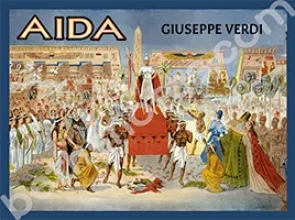
- Premiered: 1871 in Cairo.
- Language: Italian
- Recommended listening: “Triumphal March,” where the Egyptian army comes home after winning the war with the Ethiopians
- Set: Ancient Egypt during war between Egypt and Ethiopia.
- Synopsis: Tragic love triangle between Aida, an Ethiopian princess held captive in Egypt, Ramades, an Egyptian general, and Amneris, the daughter of the Pharoa
Amahl and the Night Visitors (Menotti)
Quick facts
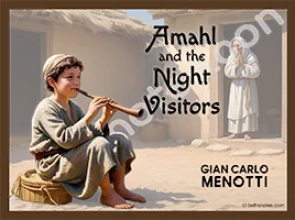
- Premiered: 1951 in New York
- Language: English
- Recommended listening: “Have You Seen A Child”
- Set: Near Bethlehem around the time of the birth of Jesus Christ.
- Synopsis: Amahl and his mother, who live in poverty, are visited by the three kings, who are on their way to visit the Baby Jesus.
The Barber of Seville (Rossini)
Quick facts
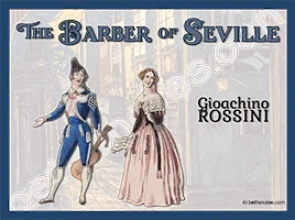
- Premiered: 1816 in Rome
- Language: Italian
- Recommended listening: “Largo al factotum,” which includes the repetition of “Figaro, Figaro…” and “Una voce poco fa”
- Set: Seville, Spain in the 17th century
- Synopsis: The barber helps Rosina, the ward of Dr. Bartolo to get free from her guardian so she can marry her love, Count Almaviva.
Carmen (Bizet)

Quick facts
- Premiered: 1875 in Paris
- Language: French
- Recommended listening: “Habanera” & “Les Toreadors”
- Set: Seville Spain around 1820
- Synopsis: A man falls hopelessly in love with Carmen, an unpredictable woman with a penchant for smuggling
Gianni Schicchi (Puccini)
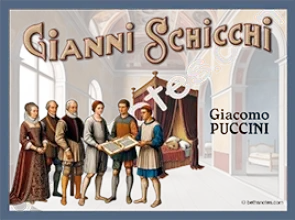
Quick facts
- Premiered: in 1918 in New York.
- Language: Italian
- Recommended listening: “O mio babbino caro”
- Set: Medieval Florence
- Synopsis: Relatives are in the bedroom of the recently-deceased Buoso Donati, hoping they were included in his will, only to find out they weren’t.
Hansel and Gretel (Humperdinck)

Quick facts
- Premiered: 1893 in Weimar, Germany
- Language: German (usually performed in English in English-speaking countries)
- Recommended listening: “Brother Come and Dance with Me” / “Evening Prayer” / “Ein Männlein steht im Walde” / “There Stands a Little Man“
- Synopsis: Based on the fairy tale
La Bohème (Puccini)
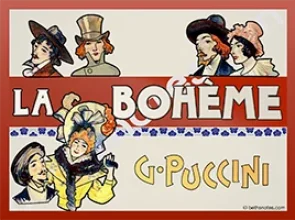
Quick facts
- Premiered: 1896 in Turin
- Language: Italian
- Recommended listening: “Quando m’en vo”
- Set: Paris around 1830
- Synopsis: Scenes of bohemian life featuring poor artists and a seamstress
La Traviata (Verdi)
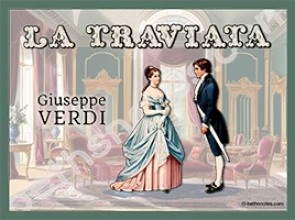
Quick facts
- Premiered: 1853 in Venice
- Language: Italian
- Recommended listening: “Libiamo, ne’ lieti calici”
- Set: Paris and surrounding areas in the beginning of the 19th century
- Synopsis: Tragic love story between Violetta and Alfredo
Lakmé (Delibes)
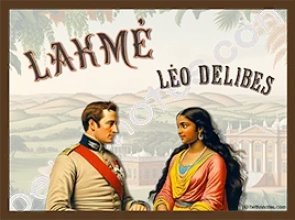
Quick facts
- Premiered: 1883 in Paris
- Language: French
- Recommended listening: “The Flower Duet”
- Set: British India in the 19th century
- Synopsis: Tragic love story between a Brahmin priest’s daughter, Lakmé, and a British officer, Gérald
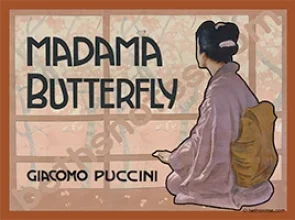
Madama Butterfly (Puccini)
Quick facts
- Premiered: 1904 in Milan
- Language: Italian
- Recommended listening: “Un bel dì, vedremo”
- Set: Japan
- Synopsis: A young Japanese woman, Cio-Cio-San (from the Japanese word for “butterfly”) marries an American naval officer, but he then disappears
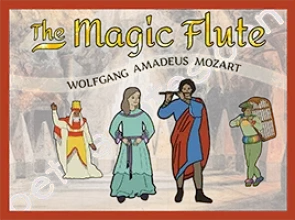
The Magic Flute (Mozart)
Quick facts
- Premiered: 1791 in Vienna (2 months before Mozart’s death)
- Language: German
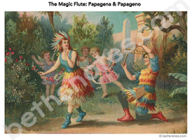
- Recommended listening: “Der Hölle Rache” (sung by Queen of the Night) and “Papageno-Papagena Duet”
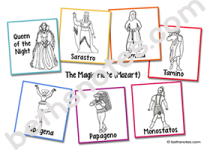
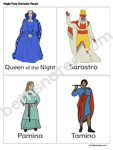
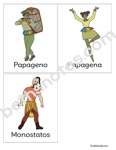
- Synopsis: The Queen of the Night’s daughter, Pamina has been captured by Sarastro, and she convinces Prince Tamino to rescue her. Instead, Tamino and Pamina go through trials of initiation to join Sarastro. His friend, Papageno fails, which doesn’t seem to matter, since he ends up with Papagena, his love match.
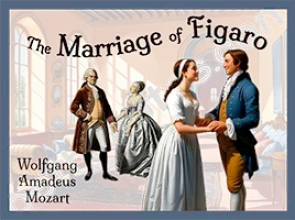
The Marriage of Figaro (Mozart)
Quick facts
- Premiered: Vienna in 1786
- Language: Italian
- Recommended listening: “Voi, che sapete”
- Set: near Seville, Spain in the 17th century, a few years after The Barber of Seville story
- Synopsis: Figaro and Susanna are servants who plan to marry, but the Count is jealous, and the Countess tries to get her husband’s attention.
Nabucco (Verdi)

Quick facts
- Premiered: 1842 in Milan.
- Language: Italian
- Recommended listening: “Va, pensiero (Hebrew Slaves Chorus)”
- Set: 587 B.C.E. in Jerusalem and Babylon
- Synopsis: “Nabucco” is version of the Italian name of “Nebuchadnezzar,” and it tells the story of the Babylonian exile of the Jews.
Pirates of Penzance (Gilbert & Sullivan)

Quick facts
- Premiered: 1879 in New York City
- Language: English
- Recommended listening: “Major-General’s Song,” “Hail Hail The Gang’s All Here“
- Set: England during the reign of Queen Victoria
- Synopsis: Frederic, who is about to finish his apprenticeship with pirates, realizes that since his birthday is on February 29, he has only had 5 birthdays. This means he must continue his apprenticeship for most of the rest of his life. Also, Frederic is in love with Mabel, the daughter of Major General Stanley.
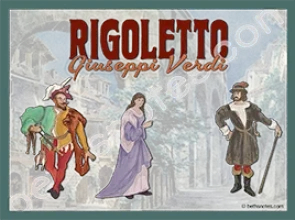
Rigoletto (Verdi)
Quick facts
- Premiered: 1851 in Venice
- Language: Italian
- Recommended listening: La donna è mobile
- Set: Mantua (Italy) in the 16th century
- Synopsis: Rigoletto is a court jester trying to protect his secret daughter from the clutches of the licentious Duke.
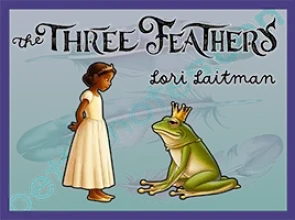
The Three Feathers (Lori Laitman)
Quick facts
- Premiered: 2014 in Virginia, U.S.
- Language: English
- Synopsis: Princess Dora finds a magic feather and is drawn to the Underworld, which is led by a Frog King. She must pass three tests to save the kingdom.
William Tell (Rossini)

Quick facts
- Premiered: 1829 in Paris
- Language: French
- Recommended listening: William Tell Overture Finale, “March of the Swiss Soldiers”
- Set: Austrian-occupied Switzerland in the 13th century
- Synopsis: Based on the story of the Swiss hero, William Tell, who did not bow and salute a government official. As a result, he was forced to shoot an apple off the top of his son’s head.