Origin
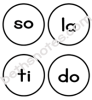
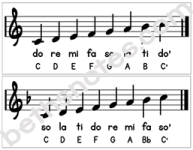
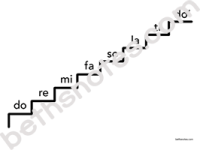
- The Solfege syllables were invented by Guido of Arezzo in the 11th century to help his singers learn the music. The syllables are based on a hymn from that period where the first syllable of each ascending line is used.
Tips for Use
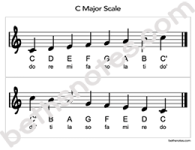
- Fixed do = do is always C. Some countries actually use the syllables in place of the letters.
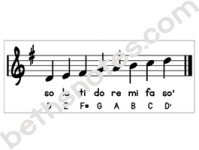
- Movable do = the tonal center is do, used by the Kodály Method.
- See Curwen hand signs.
Grade Level Suggestions
Here’s an idea of what grade levels could focus on which syllables (loosely based on the Kodály melodic sequence).
- 1st – so, mi
- 2nd – mi, so, la
- 3rd – do, re, do re mi, pentatonic
- 4th – low so and la
- 5th – fa, ti, Major scale
Visuals / Worksheet / Assessment
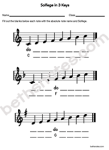
(See downloads at bottom of page. Each number has a corresponding button.)
1
2
3
See also
- Melody
- Song about Solfege syllables: J’ai perdu le do de ma clarinette
- good article
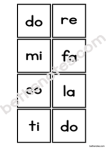
- Round & Square Solfege (Printable & Digital) Visuals
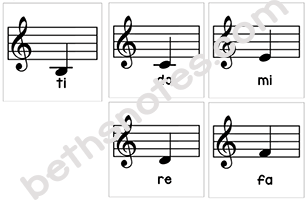
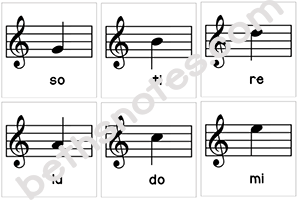
- Note Cards, key of C (Printable & Digital)
- C Major Scale (Printable & Digital) Visuals & Worksheet / Assessment
Amazon links are affiliate links. I earn a small commission, but there is no extra cost to you.